
Maine Coon History: From Working Cat to Gentle Giant
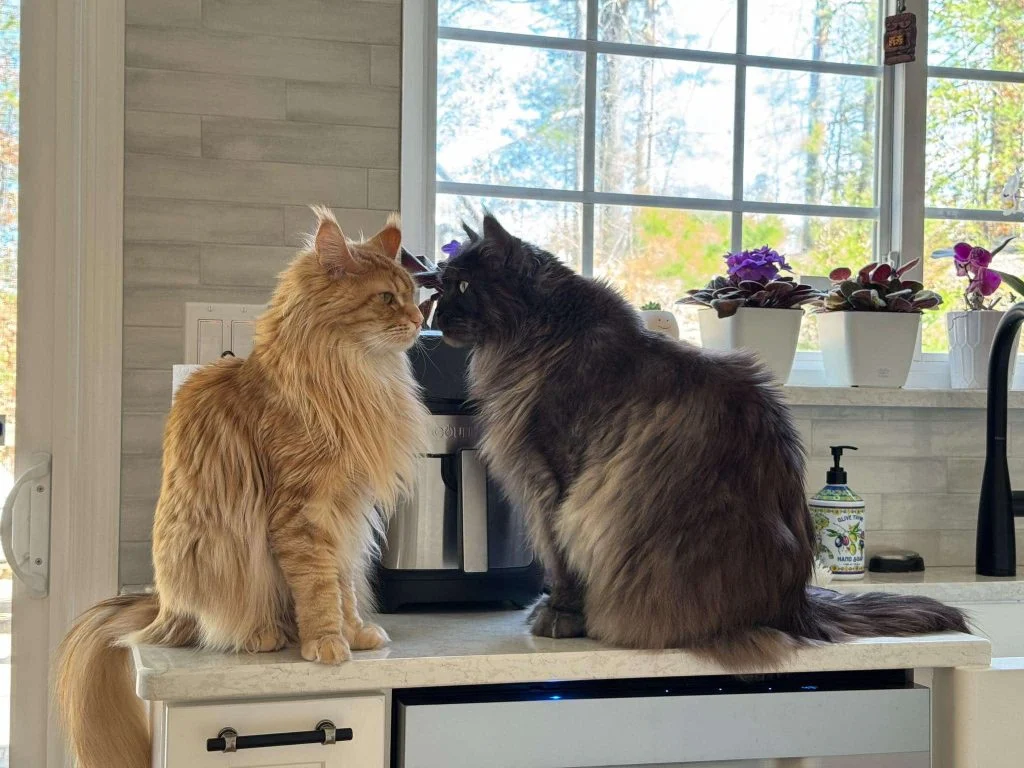
Maine Coons are instantly recognizable: large frames, tufted ears, expressive faces, and long, shaggy coats. Their appearance attracts attention, but their documented history and companionable temperament are what made them one of America’s best-known natural cat breeds.
The breed’s roots are in New England, especially Maine. Historical accounts connect their ancestors with cats brought by settlers and sailors, but no single origin story has been proved. What is well documented is that Maine Coons were established in the region by the nineteenth century and were well suited to its cold climate.
Maine Coon Origin Myths and What We Know
The raccoon story is the easiest myth to dismiss: cats and raccoons cannot interbreed. Tales involving Marie Antoinette’s cats, Viking cats, and a sea captain named Coon are colorful, but they remain legends rather than established history.
The most credible explanation is that long-haired cats brought to North America mixed with local domestic cats over generations. Natural selection in New England likely favored a sturdy body and protective coat. The Cat Fanciers’ Association describes the Maine Coon as a rugged working cat with a smooth, shaggy coat suited to a harsh climate.
Written records described Maine cats by the 1850s. In 1895, a brown tabby female Maine Coon named Cosey won Best Cat at the major Madison Square Garden cat show. The breed later lost show-ring attention as imported long-haired breeds became fashionable, but dedicated breeders helped restore recognition. CFA granted the Maine Coon championship status in 1976.
A Breed Shaped by New England
The breed standard describes a solid, rugged cat with a smooth, shaggy coat. Adult Maine Coons have fur that is shorter at the shoulders and longer along the sides, stomach, and back legs, plus a long plumed tail. Broad, well-tufted paws and a weather-resistant coat are useful in cold conditions, although popular “snowshoe” and “tail scarf” descriptions are interpretations—not documented evolutionary facts.
Polydactyly, or having extra toes, occurred in early Maine Coon populations and remains part of some lines today. It is a genetic trait, not proof that the cats were better shipboard climbers.
Maine Coons mature gradually and may continue filling out beyond their first year. Growth rate and adult size vary by genetics, sex, nutrition, and health. A young cat’s slow maturation should never be used to dismiss poor body condition or an unexpected change in weight.
Maine Coon Temperament and “Dog-Like” Traits
Maine Coons are often described as “dog-like” because some enjoy following their people, playing fetch, learning routines, or walking on a harness. These are tendencies rather than guarantees. Some are outgoing and highly interactive, while others are quieter or more independent.
Many Maine Coons use chirps, trills, and soft meows during greetings, play, or moments of interest. Vocal habits differ from cat to cat, and body language provides important context. Learn more in our guide to Maine Coon chirping and trilling.
Some Maine Coons are fascinated by moving water and may paw at bowls or investigate faucets. Others show little interest. Water play should be treated as an individual preference—not proof of a shipboard history or a behavior every Maine Coon will display.
Intelligence, Play and Enrichment
Maine Coons can learn household routines, carrier skills, scratching habits, and simple cues through positive reinforcement. Interactive play, puzzle feeders, climbing areas, and supervised exploration provide useful mental and physical enrichment. Training success depends on the individual cat, the reward, and consistent practice.
Why the Maine Coon Endures
The Maine Coon’s lasting appeal comes from a combination of regional history, a distinctive breed standard, and a wide range of companionable personalities. Responsible preservation requires attention to health screening, genetic diversity, sound structure, and temperament—not simply breeding for extreme size or exaggerated features.
Living with a Maine Coon means caring for a large, active cat with substantial grooming, enrichment, nutrition, and veterinary needs. Their reputation may attract families, but choosing one should be based on the individual cat’s temperament and the household’s ability to provide lifelong care.
The Maine Coon developed from cats established in New England and became an important part of American cat-show history. Although its exact ancestry remains uncertain, its identity as a rugged, long-haired working cat from Maine is well established.
Read our Maine Coon breed guide, view our available kittens, or review our adoption process.