
Polydactyl and Blue-Eyed Maine Coons: Genetics, History and Responsible Breeding
Maine Coons are known for their size, shaggy coats, expressive faces, and affectionate personalities. Two traits attract particular attention: polydactyly, which produces extra toes, and adult blue eyes.
These traits are genetically distinct. Polydactyly is part of the breed’s historical story, while blue eyes can result from white spotting or from newer dominant blue-eye lineages. Understanding the difference helps families appreciate these cats without overlooking responsible health screening.
Polydactyl Maine Coons: Extra-Toed Paws
What Is Polydactyly?
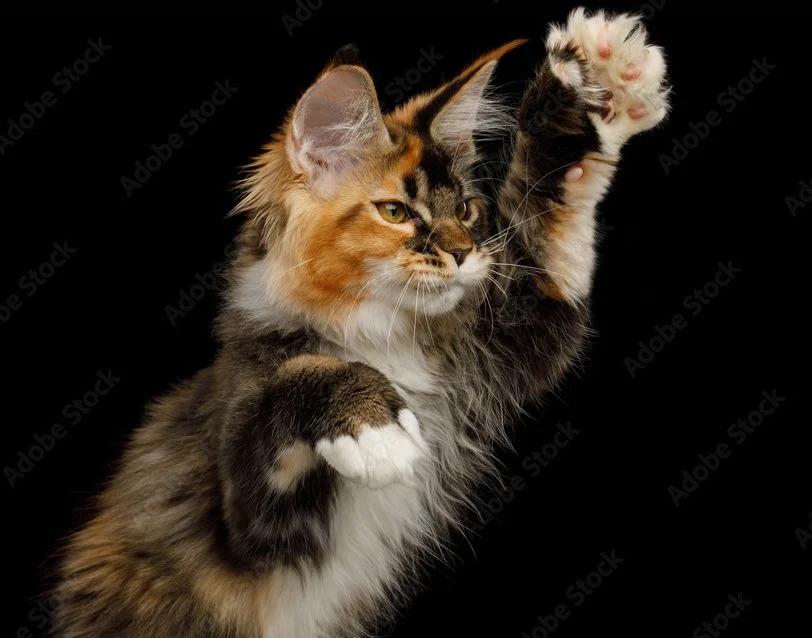
Most cats have five toes on each front paw and four on each rear paw. Polydactyl cats have additional digits on one or more paws, sometimes creating broad “mitten” or “snowshoe” feet.
Feline polydactyly is usually inherited as an autosomal-dominant trait with variable expression. Research has identified several variants in the ZRS regulatory region that influences SHH signaling during limb development. Maine Coons do not all carry one universal “Hemingway mutation,” and researchers have found genetic heterogeneity among polydactyl lines.
History and Maritime Folklore
Extra-toed cats have long been associated with ports in eastern North America and western Britain. Sailors reportedly valued them as mousers and considered them lucky. Stories that their paws gave superior balance aboard ships or acted as natural snowshoes are appealing folklore, but they should not be presented as proven evolutionary advantages.
Polydactyl cats are also connected with Ernest Hemingway’s Key West home, which helped popularize the nickname “Hemingway cats.” The trait itself existed long before Hemingway and is not exclusive to Maine Coons.
Breed Recognition and Care
TICA maintains a Maine Coon Polydactyl breed standard. Rules vary among registries, so show eligibility should be checked directly with the relevant organization.
Polydactyly is usually compatible with a normal, active life. Owners should inspect every toe regularly because hidden or unusually positioned claws can overgrow or become ingrown. A veterinarian should evaluate pain, limping, malformed digits, or recurrent nail problems.
Blue Eyes in Maine Coons: Color, Genetics and Health
Normal Eye-Color Development
Kittens begin life with blue-appearing eyes because pigment in the iris is still developing. Eye color usually changes during the first months of life, although timing varies.
Blue Eyes Associated With White
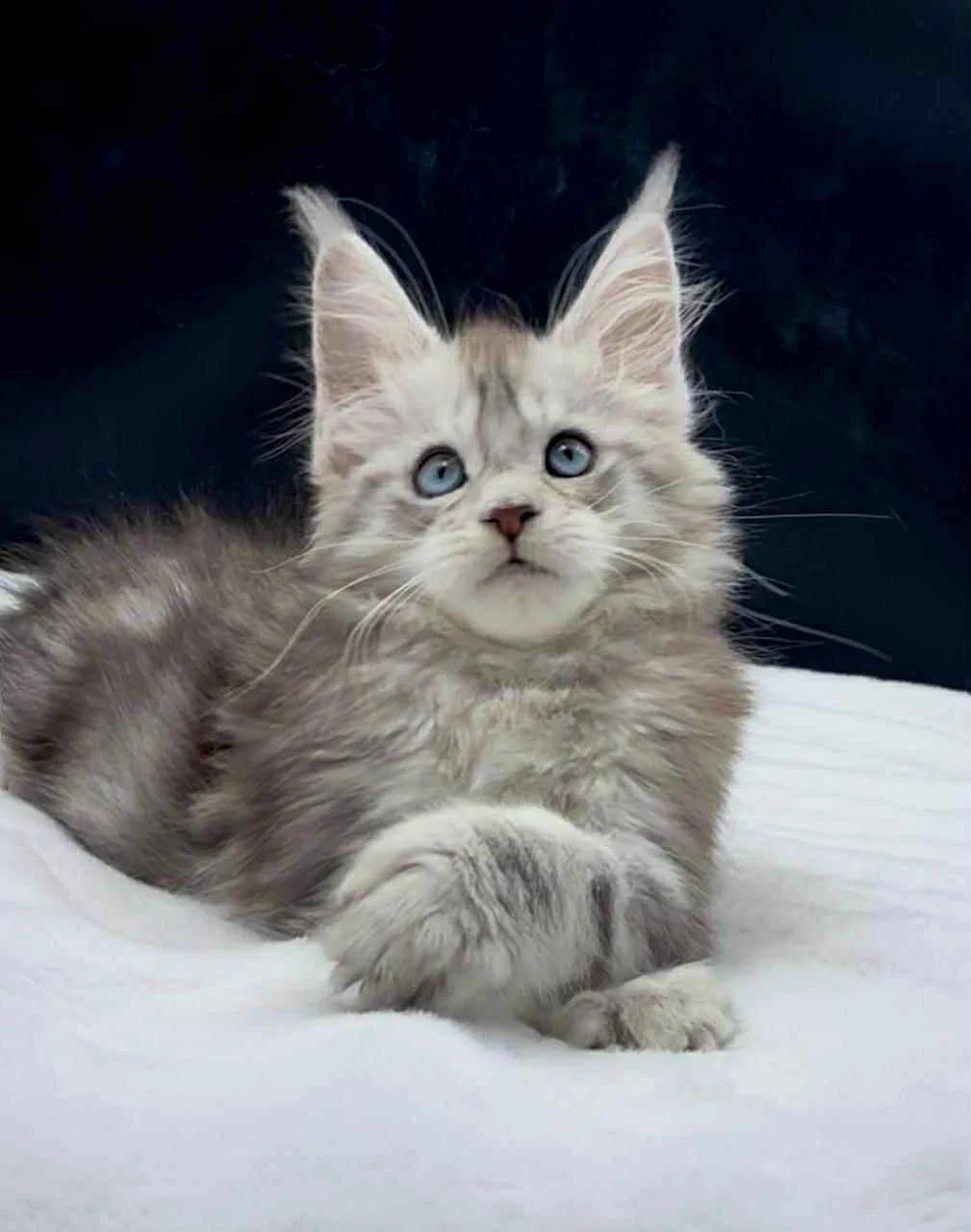
In Maine Coons, blue or odd eyes can occur with white coats or white spotting because pigment-producing cells may be absent from part or all of the iris. TICA permits blue and odd eyes in white and particolor Maine Coons. White-associated blue eyes can also be associated with congenital deafness, so hearing evaluation may be appropriate.
Dominant Blue Eyes in Non-White Cats
Researchers have identified multiple dominant blue-eye (DBE) founder variants involving PAX3 in cats, including Maine Coon lines. These variants can produce blue or odd eyes with limited or variable white spotting.
Some DBE variants and breeding combinations have been associated with hearing impairment and other developmental concerns. Risk is not identical across every lineage, and appearance alone cannot identify the exact variant. Responsible breeding requires documented pedigree information, appropriate DNA testing when available, veterinary examination, and hearing assessment such as BAER testing when indicated.
Registry rules for DBE cats can change and differ by organization. Buyers and breeders should verify the current rule directly rather than relying on social-media claims.
Beauty, Heritage and Responsibility
Polydactyl paws and blue eyes can both be striking, but rarity should never outrank health, temperament, and careful breeding decisions.
For polydactyl cats, owners should understand the inheritance pattern and provide routine nail care. For blue-eyed cats—especially those from DBE lines—breeders should know the specific lineage, use available genetic and hearing evaluations, avoid high-risk pairings, and communicate results honestly to families.
At Majestic Maine Coon Cats, unusual traits are appreciated within a health-first program. Learn more about our breeding philosophy, view our planned pairings, or explore our available Maine Coon kittens.
Trusted references: TICA’s Maine Coon overview, the TICA Maine Coon Polydactyl page, and peer-reviewed research on Maine Coon polydactyly and dominant blue-eye genetics.
This article is educational and does not replace veterinary or genetic counseling.