
Maine Coon Health: Common Concerns and Preventive Care
Maine Coons are generally robust cats, but responsible owners and breeders should understand several conditions seen in the breed. Important concerns include hypertrophic cardiomyopathy (HCM), hip dysplasia, spinal muscular atrophy (SMA), pyruvate kinase deficiency, and dental disease.
DNA screening can identify certain inherited variants, but it does not rule out every possible cause of disease. A strong health program combines appropriate genetic tests with veterinary examinations and condition-specific screening.
HCM: Genetics, Screening and Healthy Weight
HCM causes abnormal thickening of the heart muscle and is the most commonly diagnosed heart disease in cats. Maine Coons can carry a known MYBPC3 variant associated with HCM, but not every affected cat carries that variant—and a negative DNA result does not guarantee that a cat will never develop HCM.
For breeding cats, periodic echocardiograms interpreted by a board-certified veterinary cardiologist provide information that a DNA test alone cannot. Maintaining a healthy body condition supports overall heart and joint health, but weight control cannot prevent inherited HCM.
Seek urgent veterinary care for difficult or rapid breathing, collapse, sudden weakness, or painful paralysis of the rear legs.
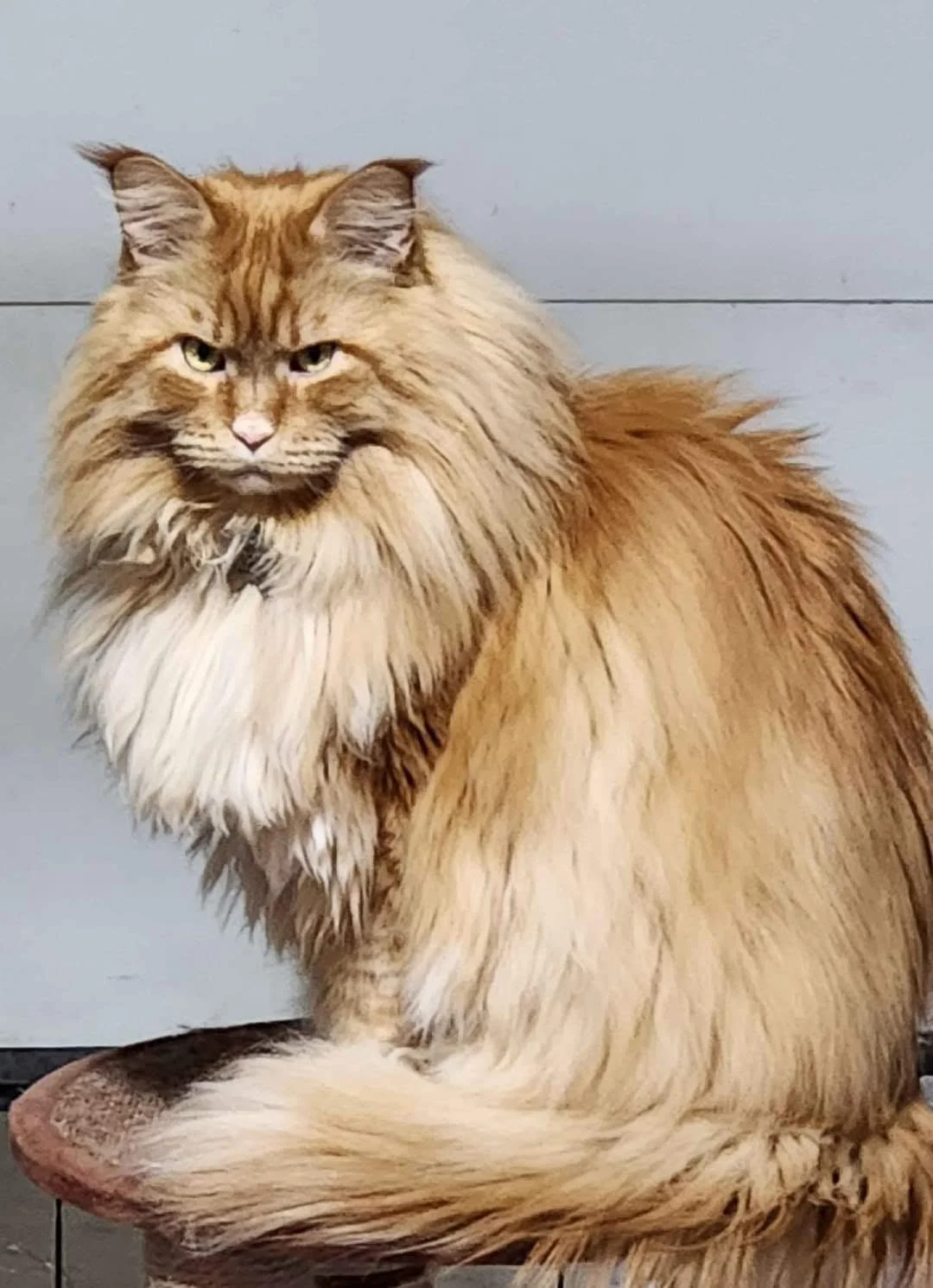
Healthy Weight: Frame vs. Body Condition
Maine Coons have large frames and thick coats, so weight alone does not determine whether an individual cat is healthy. Instead of aiming for an unusually high number on the scale, ask your veterinarian to evaluate body-condition and muscle-condition scores.
You should generally be able to feel the ribs with light pressure and notice a waist behind the ribs. Sudden weight loss, rapid weight gain, or reduced muscle should be discussed with your veterinarian.
Checking Your Maine Coon’s Body Condition
A Maine Coon’s dense coat can hide changes in body condition. Use a gentle hands-on check:
- Ribs: They should be easy to feel beneath a light layer of tissue.
- Waist: Look and feel for a slight narrowing behind the ribs.
- Abdomen: A normal primordial pouch is loose skin, not a firm mass.
- Trend: Weigh your cat regularly and watch for unexplained changes.
Your veterinarian can show you how to score your cat accurately and recommend an appropriate calorie target.
Exercise for a Large, Active Cat
Safe Exercise for a Large, Intelligent Cat
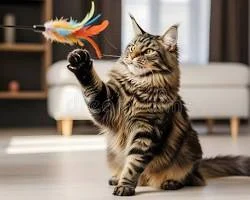
Daily play helps maintain muscle, mobility, and a healthy weight. Offer short, interactive sessions suited to your cat’s age and fitness.
- Use sturdy wand toys and allow your cat to “catch” the toy at the end.
- Rotate puzzle feeders and treat toys for mental stimulation.
- Provide a stable, wide-based cat tree with platforms sized for a Maine Coon.
- Supervise string, bungee, and feather toys, and put them away after play.
- Increase activity gradually for overweight, older, or medically affected cats.
If your cat pants, struggles to breathe, becomes weak, or stops playing unexpectedly, end the activity and contact your veterinarian.
Dental Health and Feline Stomatitis
Red or painful gums should never be dismissed as normal teething. Juvenile gingivitis and feline chronic gingivostomatitis (FCGS) can look similar to an owner, but they have different causes and treatment plans. A veterinarian should examine persistent redness, bleeding, bad breath, drooling, or difficulty eating.
What Is Feline Chronic Gingivostomatitis?
FCGS is a severe, painful inflammatory disease affecting the mouth, often extending beyond the gumline toward the back of the mouth. Its cause is complex and involves an abnormal immune response. Treatment is individualized and may include dental procedures, pain control, and other veterinary therapies.
FCGS is not simply “bad teeth,” and it should not be diagnosed or treated at home.
Warning Signs of Oral Pain
- Pawing at the mouth or face
- Drooling, bleeding, or persistent bad breath
- Approaching food but backing away after trying to eat
- Chewing on one side or dropping food
- Weight loss or reduced grooming
These signs warrant a veterinary examination. Cats that cannot eat, appear severely painful, or become weak need prompt care.
Growth and Maturation
Patience During Slow Maturation
Maine Coons mature more slowly than many cats and may continue filling out for roughly three to five years. Young cats can look long and lean during growth, but slow maturation should never be used to explain away poor body condition, weight loss, or delayed development.
Feed a complete and balanced diet appropriate for your cat’s life stage, monitor growth with your veterinarian, and avoid supplements unless your veterinarian recommends them.
Trusted references: TICA’s Maine Coon breed and health overview and the Cornell Feline Health Center’s HCM guide.
This article is educational and does not replace individualized veterinary advice.
Continue with our Maine Coon nutrition guide or review our kitten care essentials.